Let's Eat, Let's Dance: Trans Lifeline's "Care On Our Terms" zine
Trans Lifeline and I made a zine together, and it's out now!

“Care on Our Terms” is out now + a black and white edition where you can colour it in yourself! You can download free digital copies at https://translifeline.org/safe-hotlines/zine/ !
I do not claim to know the lived experiences of queer, trans, mad, Black, and Native people on Turtle Island. I am not from Turtle Island. These illustrations are my offerings of gratitude as someone who on the other side of the world benefits from the language, movement, and resistance work by your communities.
I documented my initial thoughts while working on the zine in a previous Substack post called “Thoughts on Extraction”. I didn’t want to name the project and the client until the zine was officially launched, but it felt urgent to me to say the things I said there. Now that the zine is out and about, I’m glad I can write more about the process.
This has truly been my most favourite commission to date, and my best work.
During that first call, as we were talking about the zine and abolition, I kept thinking back to the impossible weight of settler colonialism, and how memory is embedded in all of our bodies.
I remembered my grandmother. There is a story that she “went mad” for 2 years, and walked from Jasin, Melaka to Teluk Intan, Perak, a 300+km journey, to find her immediate family. I remembered my father. His siblings swear in his younger years he was very different, that he was kind, but something changed somewhere. I remember how I carry them in my body, along with all my other relatives, both kangani and indentured labourer, policeman and imprisoned. I carry them now as queer, trans person that my government seeks to murder, in a world slipping away under a polycrisis.
And they ask us why we’re ill? Huh.
The abolitionist world that this zine is putting to practice reminded me so much of Octavia E. Butler’s Parable series. As the Earthseed duology is set in the redwood forests of California, it was really important that the visual storytelling centred Indigenous communities whose land the story is set in, and have been doing this work for generations. The Native communities that inform these illustrations are the Yurok, Hoopa, Karuk, Tolowwa, Wiyot, and Chimariko people. Land back is among many pivotal pathways to address these colonial legacies, and being to facilitate the healing we need from it.
Octavia calls it Acorn, talks about the bread Lauren learned to bake with it from her mother, rotating the crops, the cabins they built, the trees they plant at their love one’s graves. Earthseed and Acorn is Black, Native knowledge. I can’t just draw my interpretation idea of Acorn without learning more about the very real people and the very real land that very much exists.
Anything less is extraction. - excerpt from my post, “Thoughts on Extraction”.
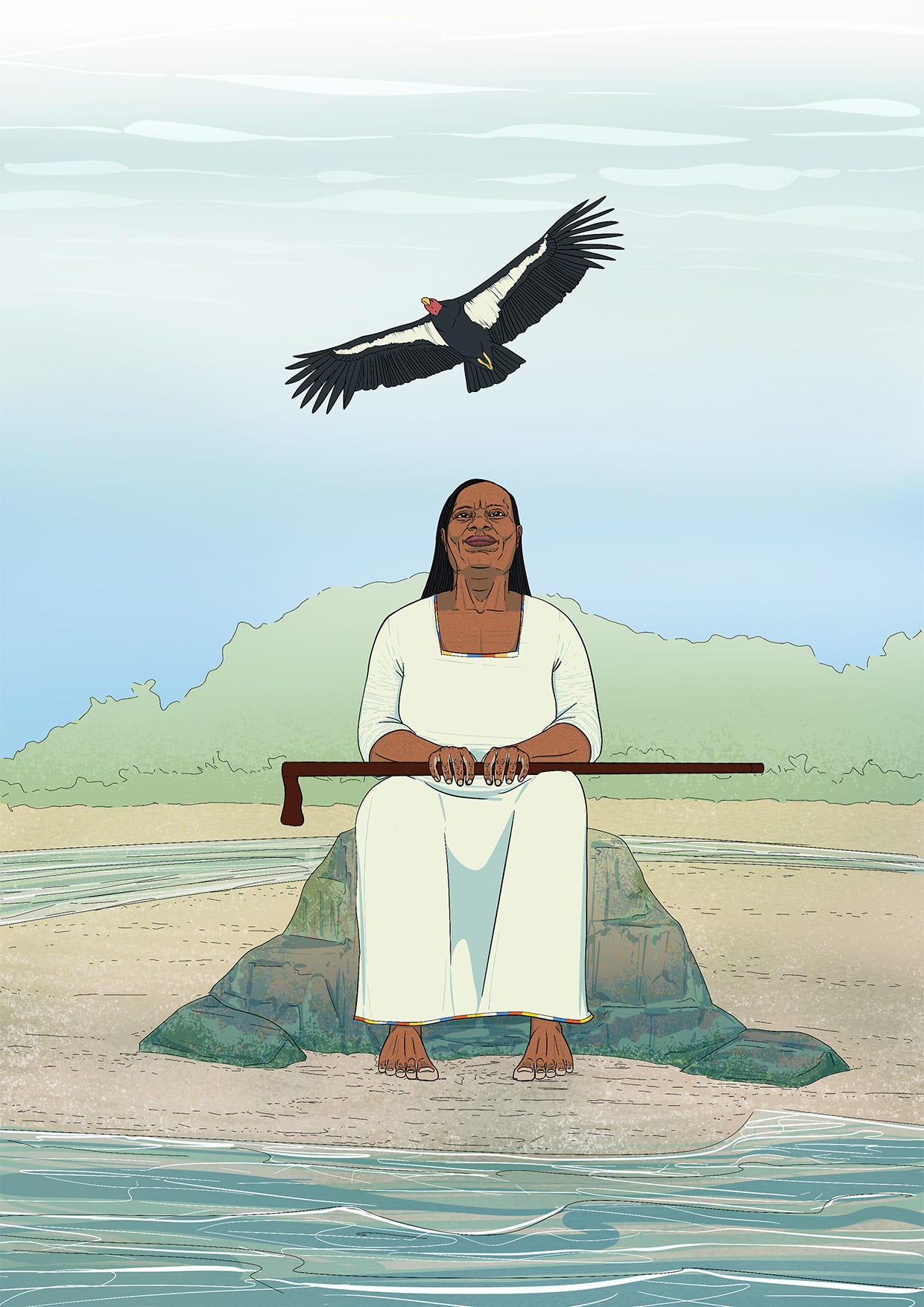
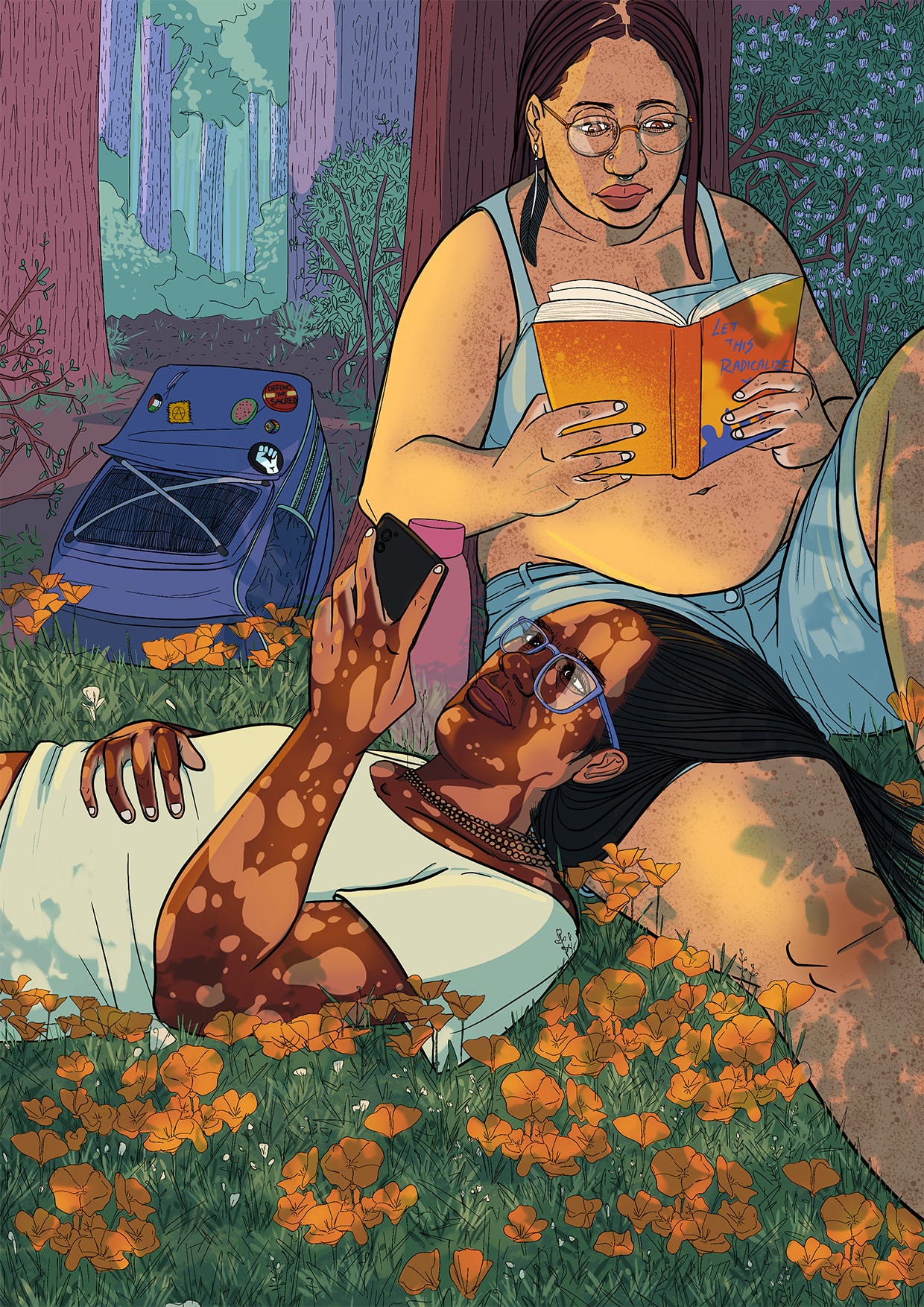
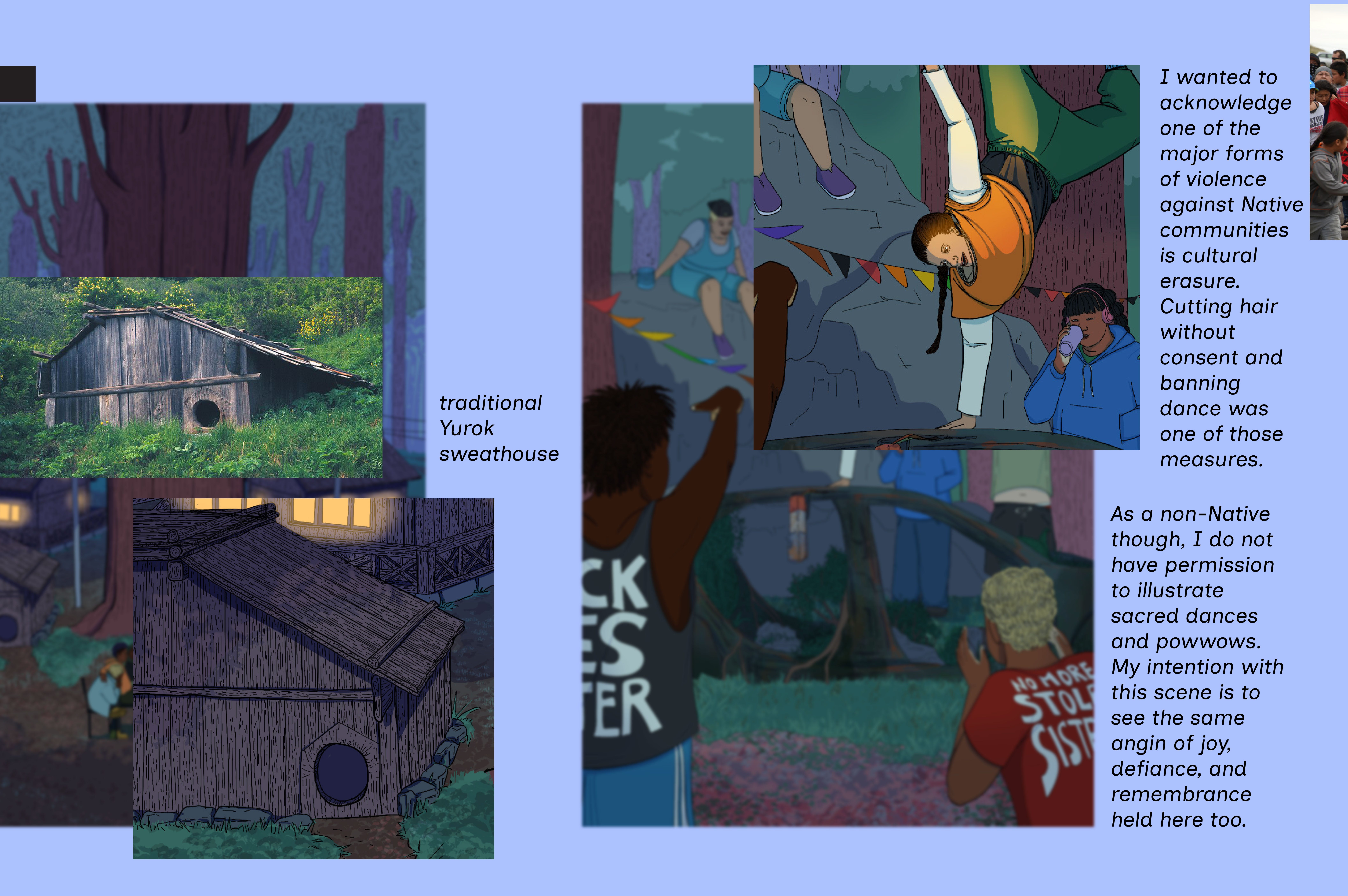
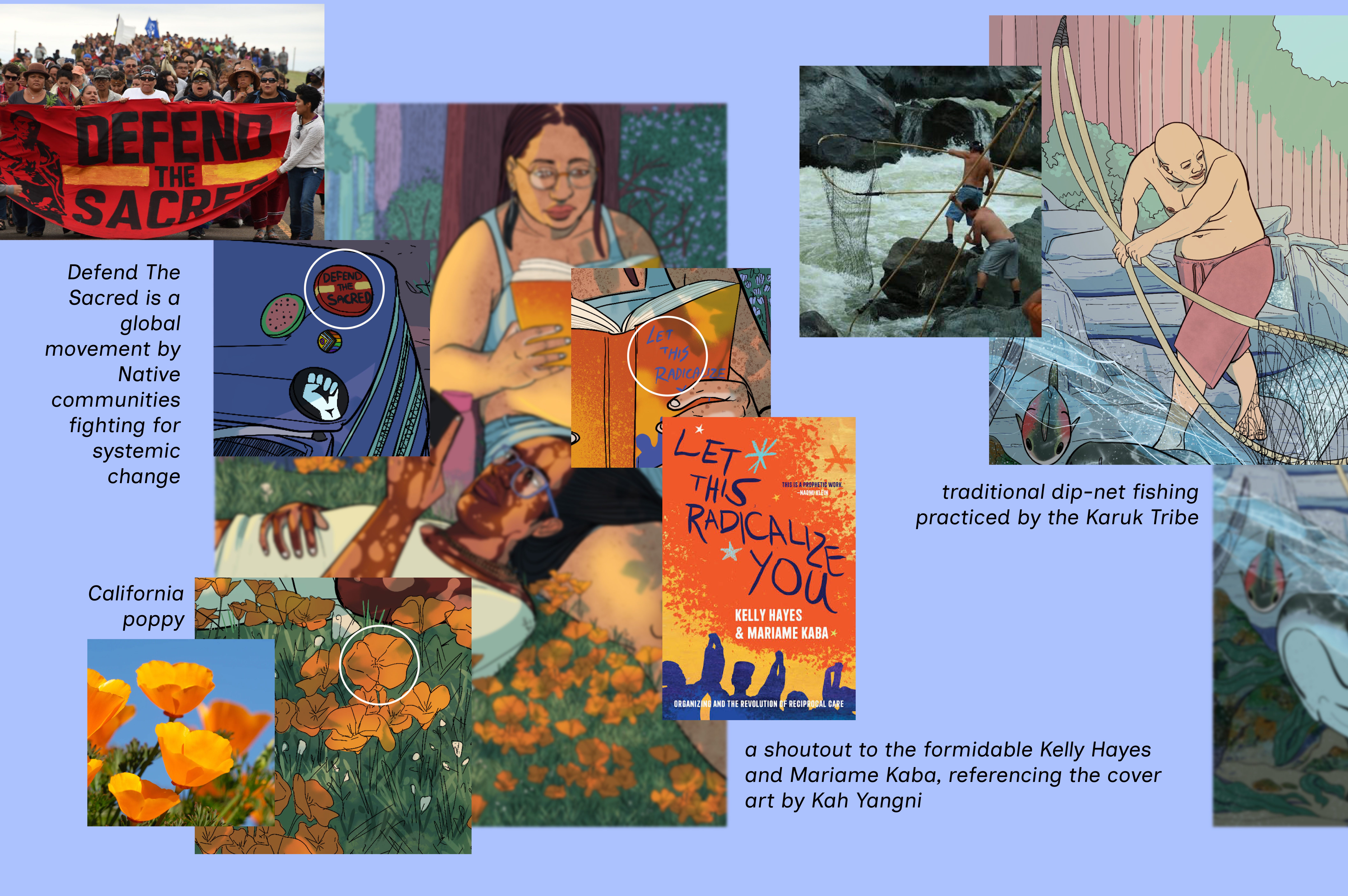
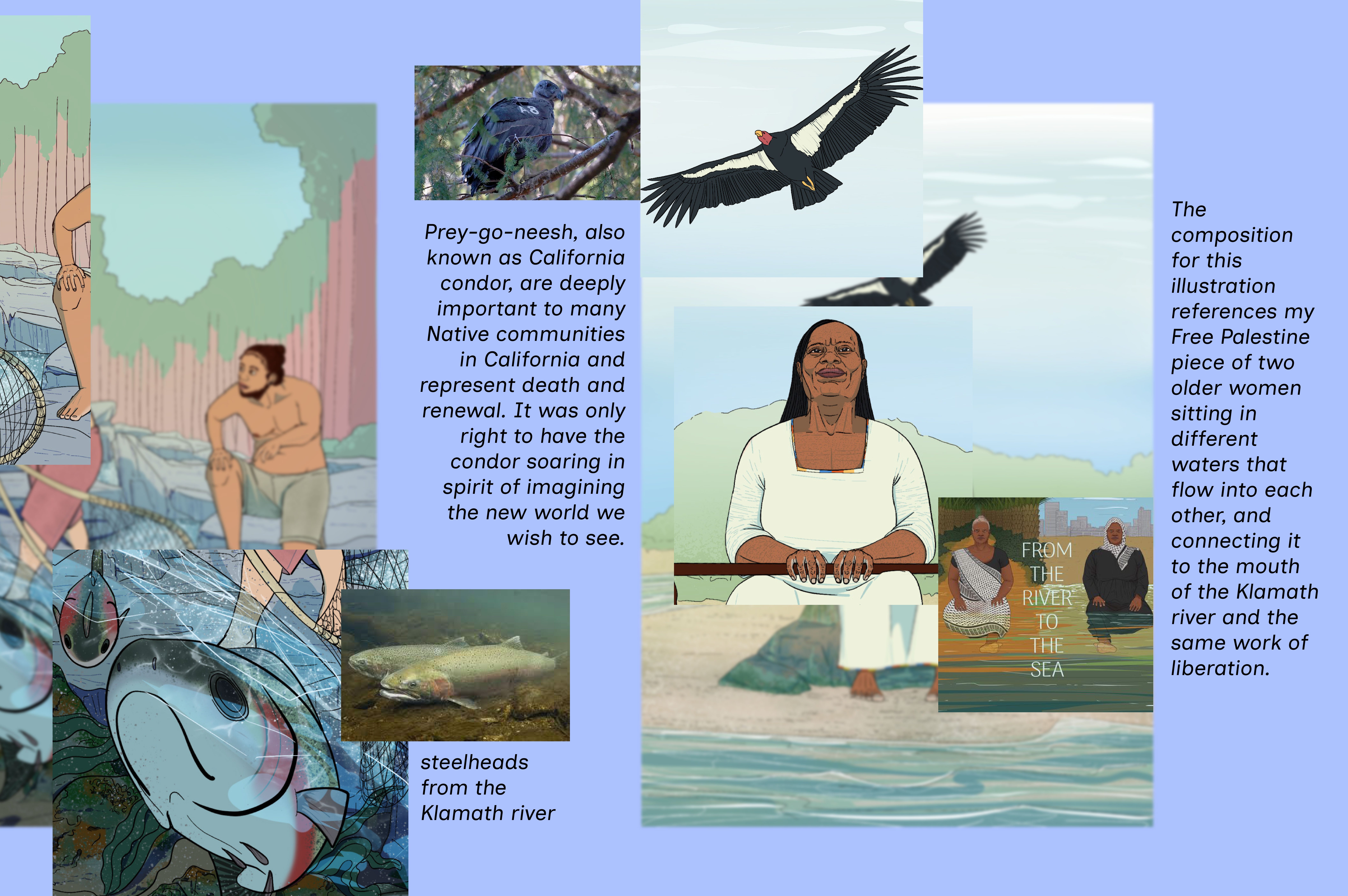
I am big on little moments, and that is true for all of my art. I think it’s in the work of visualising the little moments that help people relate to how possible it all is. I want to show that what many might consider mundane is actually deeply precious, magical, and calling us to defend - to be able to cook with a open fire, to sit with friends and talk through the night, to dance on top of a police car, to catch fish the way your ancestors have always done, to sit in the quiet of the evening scrolling on your phone or reading a book, to look on to the horizon as a condor soars above.
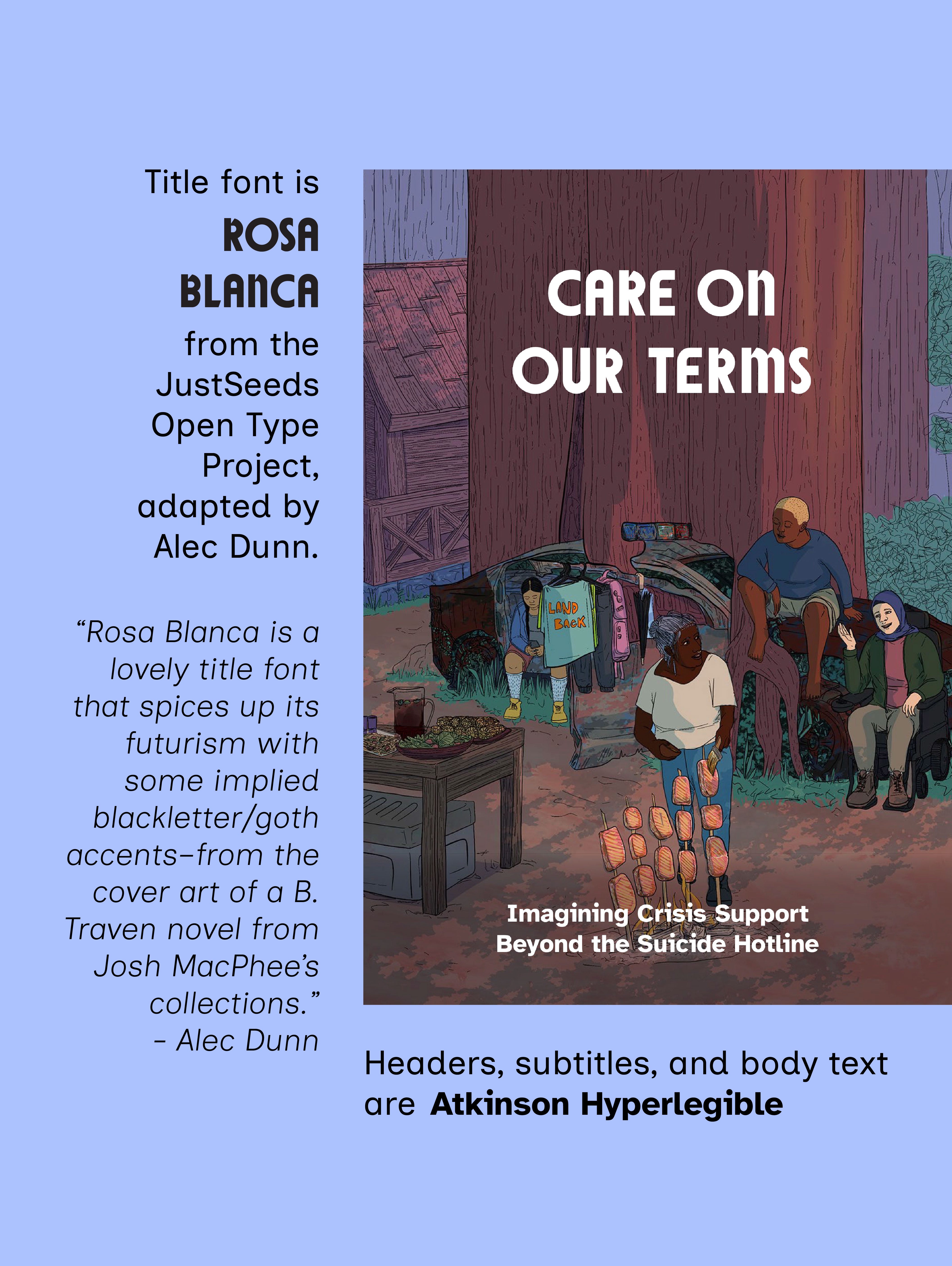
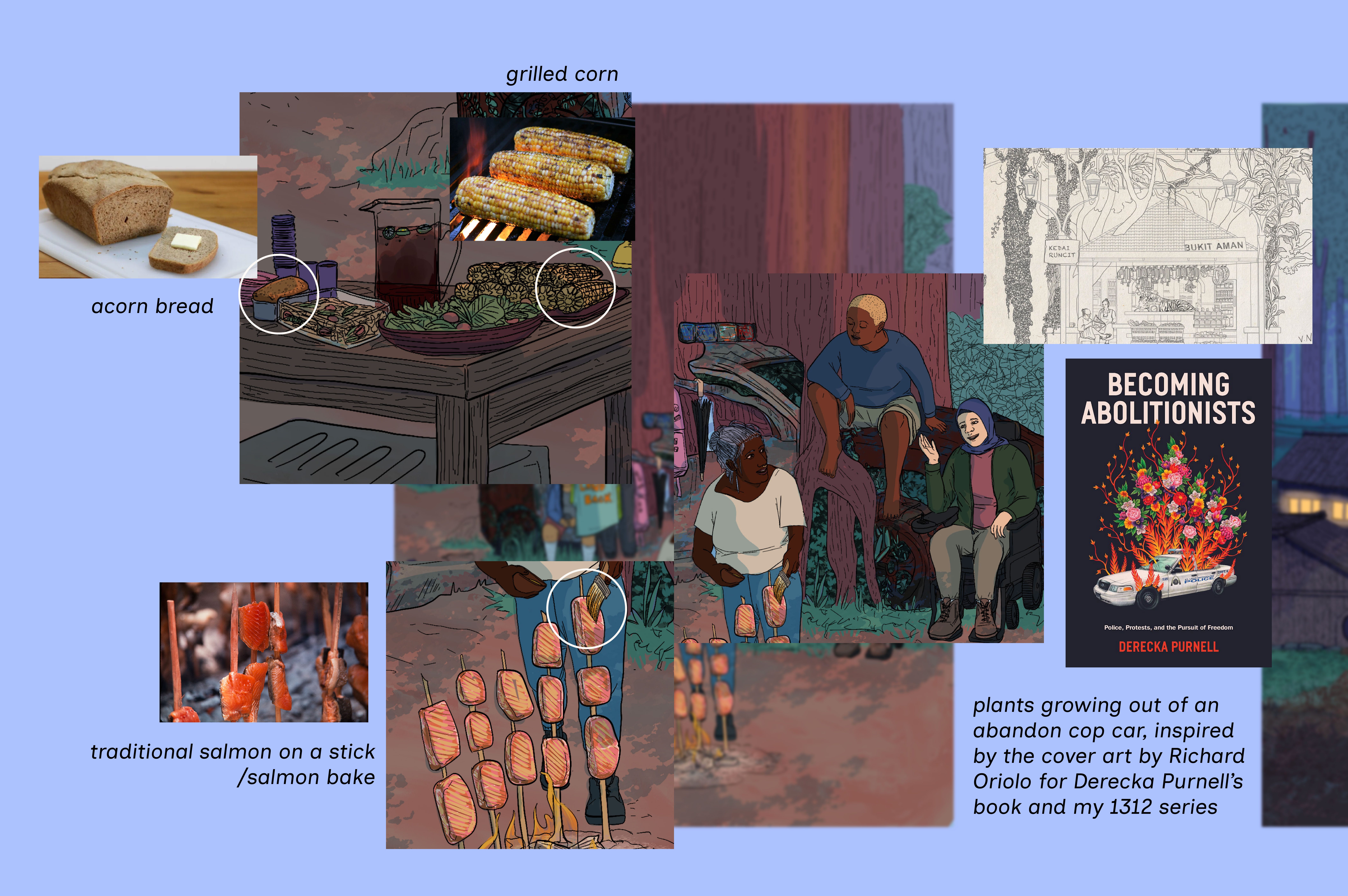
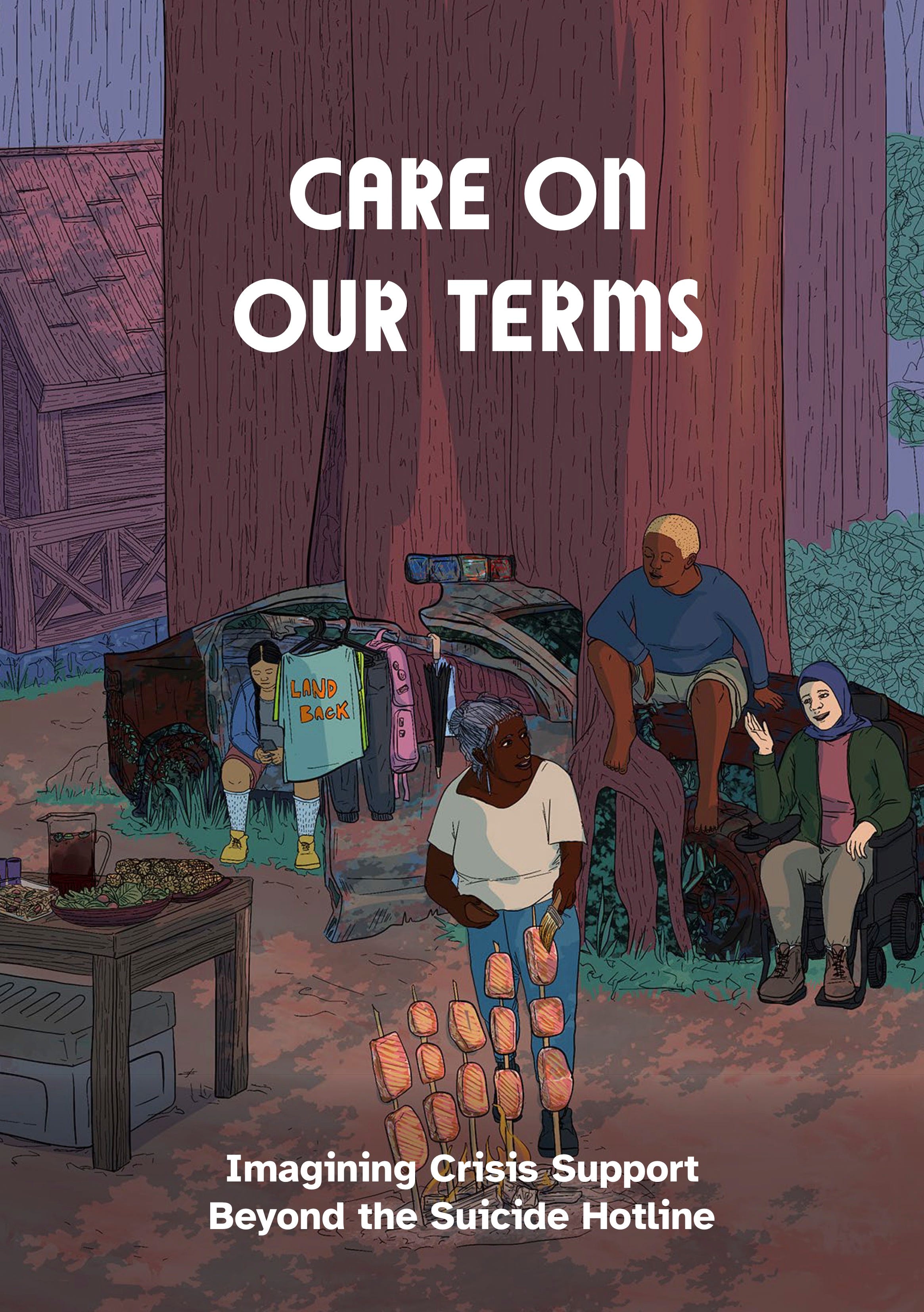
The intention for the cover is to feel like a welcome. To me, a welcome looks like lots of good food. We have salmon on sticks, basted with butter and herds. We have acorn bread of course. Can’t forget the grilled corn. And did you know that rusty cop car door actually makes a great laundry rack? Come grab a plate and let’s talk about how we can show up for each other. Don’t forget your iced tea!
These possible futures come from the ceaseless organising and movement building in our present lives such as Black Lives Matter, No More Stolen Sisters, Defend The Sacred, Free Palestine, Land Back, queer and trans justice, police, prison, and psychiatric abolition, among many others. Our lives are interdependent and intersectional, and I wanted every scene to remind us of this and acknowledge the work behind it.
I take Toni Cade Bambara’s charge to make the revolution irresistible to heart. I’ve written more about this in an old Substack post called “What Does “Irresistible” Mean To You?”, and I still think that while “irresistible” is defined through practicing oppression, it cannot help but give way to the joy of the oppressed.
What would a world that nurtured people to heal each other and express what is innate to them through making things together without extracting from each other look like? - excerpt from my post, “What Does “Irresistible” Mean To You?”
This is the list of resources that helped me to create the illustrations in the zine. I am grateful for every person here. Thank you for the work that you do.
The Yurok People: The Klamath Tribe - History, Culture and Affiliations | Jaguar Bird
Restoring The River with the Yurok, Hupa and Karuk | Tending Nature | Season 2, Episode 3 | KCET
Restoring the Klamath River: Inside the world’s largest dam removal project | An ABC10+Special
Redwoods Shouldn't Be So Tall. Here's Why They Are | PBS Terra
Redwoods: The Tallest Trees | National Geographic
Our Sacred Earth | Mother Nature Ep. 5 | Earthrise
Blackfoot Strive to Reintroduce Buffalo After 100-Year Absence | Full Documentary | PBS
History of Native California | Cal Poly Humboldt PBLC
Broken Treaties (Full documentary) | Oregon Experience | OPB
How This Native American Elder Reclaimed Sacred Land in the Bay Area | KQED Truly CA
Native American History | CrashCourse
Stories | California Native Plant Society
Imperiled Species of the Klamath-Siskiyou | KS Wild
Collections | Sípnuuk Digital Library
Common Native Plants | Redwood National and State Parks
And an additional special shoutout to Mariame Kaba, Kelly Hayes, the book they wrote together, “Let This Radicalise You”, and the artist behind the cover, Kah Yangni. Your work is transformational, and I hope the illustration that features the book honours you.
I think, what makes these illustrations feel so alive, is finding the shared angin. Angin in grief, angin in joy, angin in the refusal to throw each other away - the same angin that moves Lauren to write Earthseed and a new imagined community. And so this zine is very much what I see her Acorn to be - A cop car reclaimed by a redwood tree, a perfect clothesline. Freshly caught salmon roasting in an open fire, almost done. We are glad everyone could make it. Let’s eat, let’s dance, let’s sit together, let’s hold each other.