

On Responsibility: Working on the "Stones That Shaped Us"
Working with and illustrating for cultures I do not belong to, and how I've been navigating it so far.

“Stones That Shaped Us”, Pacific Feminist Fund’s latest annual learning report is out today. You can read it here.
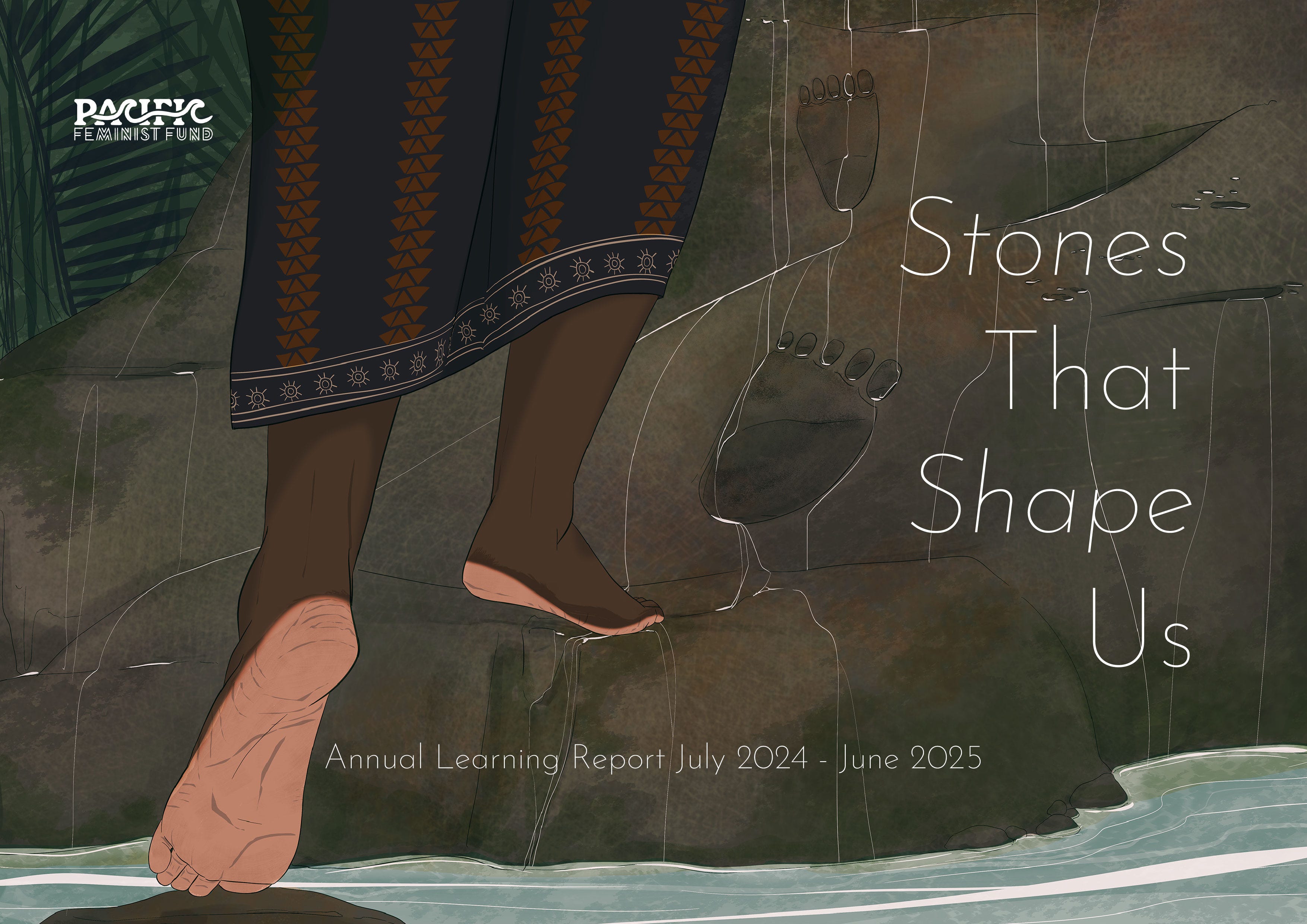
The timing of this commission is interesting. I’ve been thinking about what it means to be an internationalist, as someone is actively working on being as Alexis Pauline Gumbs put it, an aspirational cousin to all sentient beings1, and as someone who is being invited more and more to work with and illustrate for international organisations. I am very grateful for these opportunities, and I do not take these requests lightly. Organisations have a responsibility to uplift artists within their communities by providing these opportunities to them, and redistributing their wealth through these commissions. And I have a responsibility to not be an extractive asshole when I am asked to step forward in these ways.
In the hundreds of cover letters I’ve written since losing my job in 2023, I talk about wanting to use my skillsets to support the Work. What does that actually mean though? Does it begin and end with my brush stroke and pixel-by-pixel adjustments on InDesign? Or whether its pretty? Or that the funder is happy? Or that it honours the stories and people in it? “I don’t know I’m just the graphic designer”?
I think of my skillsets beyond literal design. Supporting the Work means supporting it’s spirit, honouring its intention. To me, every illustration I ever make for a project is like setting a flower on an altar. And in order to do that, I must be clear about who I am and all that I bring with me.
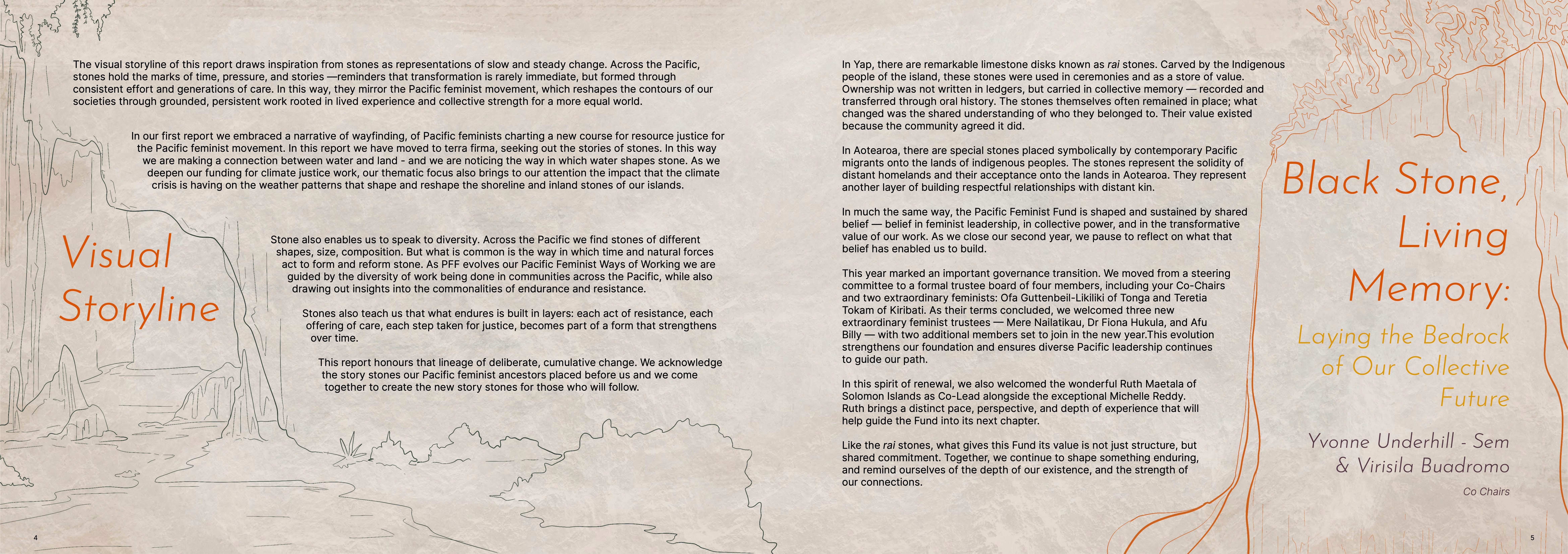
In my previous post, I wrote about angin. These days it’s been kuat, especially with this report. If you read it, you can feel it, or at least, I could feel it. And that did make me nervous. The visual concept was already set by the client when they brought me on, as it serves as the metaphor for the entire report. I’m not Pacific Islander, and my culture (as far as I’m aware) doesn’t have as close as a relationship and history to stones, but I am Southeast Asian, I know gods when I see them, and I know better than to refuse to listen.
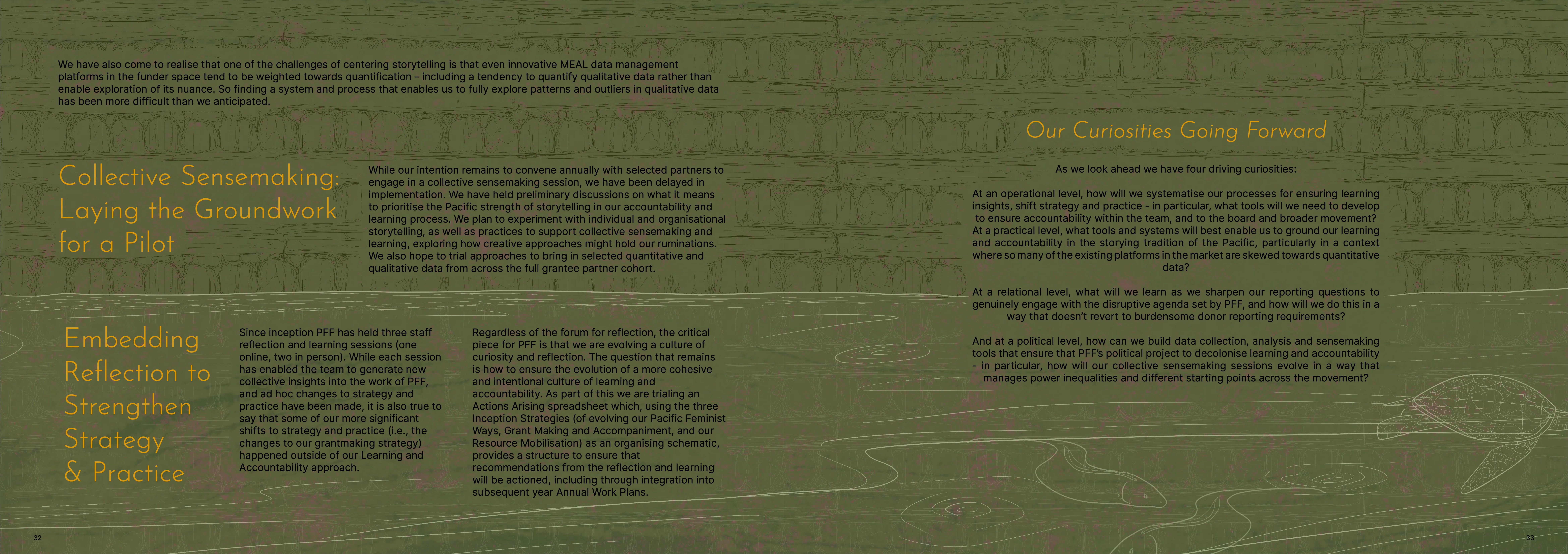
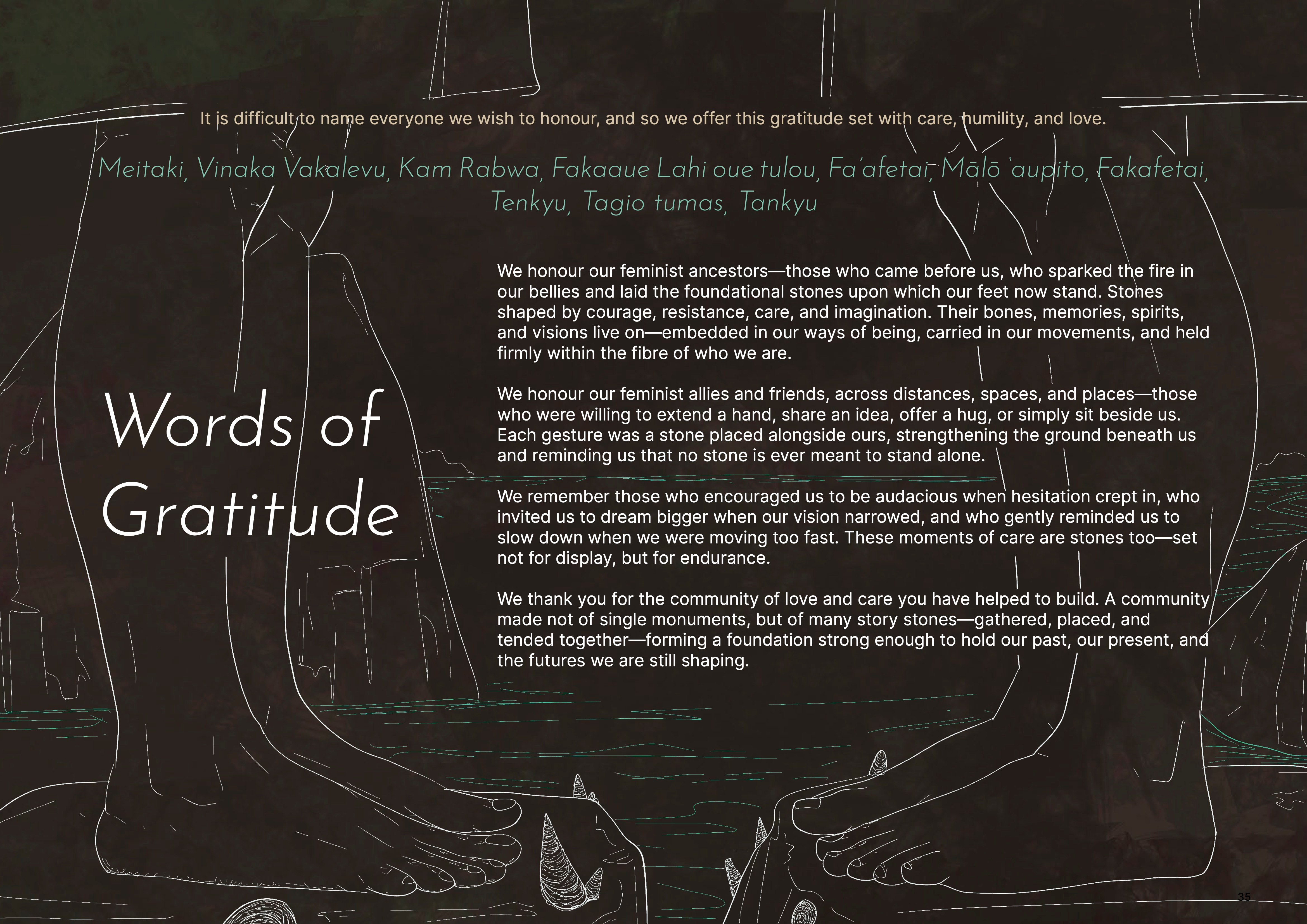
Stones are cousins, ancestors, children, parents. They mark the fall of colonisers and tyrants, they remember the passing of loved ones, they are homemakers. They are there at your birth, and they are there at your death. I understood that. The images repeat for that reason. I might understand, but understanding and knowing are very different things. I’m not from the Pacific, I will never know, and I do not have permission to do anything else. My responsibility here is to set the flower, not make the altar.
I usually pull together a lookbook at the start of every project so that both me and client are on the same page when it comes to the overall execution. Even if the direction has already been set, I include a concept note to accompany the images references. It informs the client about what I’ve understood from the brief, and helps me process my learnings. I really like what I wrote for this project. The emotional and spiritual journey of illustrating this report felt like a fractal of how I view my practice as a whole, so I’ll end this post with it:
Weathering. The transformation of rocks. Cutting, shaping, bending, cooling, shifting through slow, slow, persistent, multi-pronged work.
Often times when we hear the term “weathering” in every day conversation, we mean to whittle down and wear out.
Working on the visual narrative of the report has me reflecting on the flip side of this thought. Weathering as giving parts of yourself to change and be changed in turn. To become what is needed, to be moved to where you are needed.
And while these frameworks are meaningful, I know that the weathering we are witnessing in the context of the Pacific is the violent fallout of a climate crisis caused by Western imperialism.
Meaning-making in systems hellbent on eating itself from within can sometimes sound naive, dismissive, and in its worst moments, justification for the oppression we experience. Holding both does not negate either truths. Holding both is the reality of movement building - to find the lessons that nature can teach us, practice them in our resistance, and leave new footfalls for generations to follow.
I borrow this from Alexis Pauline Gumbs’s bio. Her book, “Undrowned”, is something I’ve not stopped carrying with me since reading it in 2021.